The Calculator Contradiction: Why AI Won't Replace Your Job
We stand at a very noisy crossroads today. On one side, enthusiastic voices are shouting that Artificial Intelligence is a magic wand that will solve every problem and do all our work for us. On the other side, experienced professionals are losing sleep, quietly terrified that their hard earned skills are about to be entirely replaced by a chatbot. The debate is loud, and it feels completely unprecedented. But to understand what is actually happening to the future of work, we need to look back at a rather boring plastic object on your desk: the electronic calculator.
There was a time when the word "computer" was not a machine, but an actual job title for a human being. Before the 1970s, a huge part of being a mathematician meant spending weeks or months just doing manual arithmetic. Mathematicians dedicated entire careers to discovering clever formulas and shortcuts simply to calculate numbers faster. It was tedious, exhausting work.
When electronic calculators and early computers first entered universities and schools, there was absolute panic. Teachers protested. Experts wrote angry articles claiming that human intelligence would rot and that the noble art of mathematics was officially dead. They believed that if a machine could calculate, the human mathematician had no purpose left.
But mathematics did not die. In fact, it exploded into something extraordinary.
Why the Calculator Didn't Replace Mathematicians
The electronic calculator did not make mathematicians obsolete. It simply killed the part of their job that was mechanical drudgery. Freed from the endless hours of arithmetic, the mind of a mathematician wandered into territories that were previously unthinkable to explore.
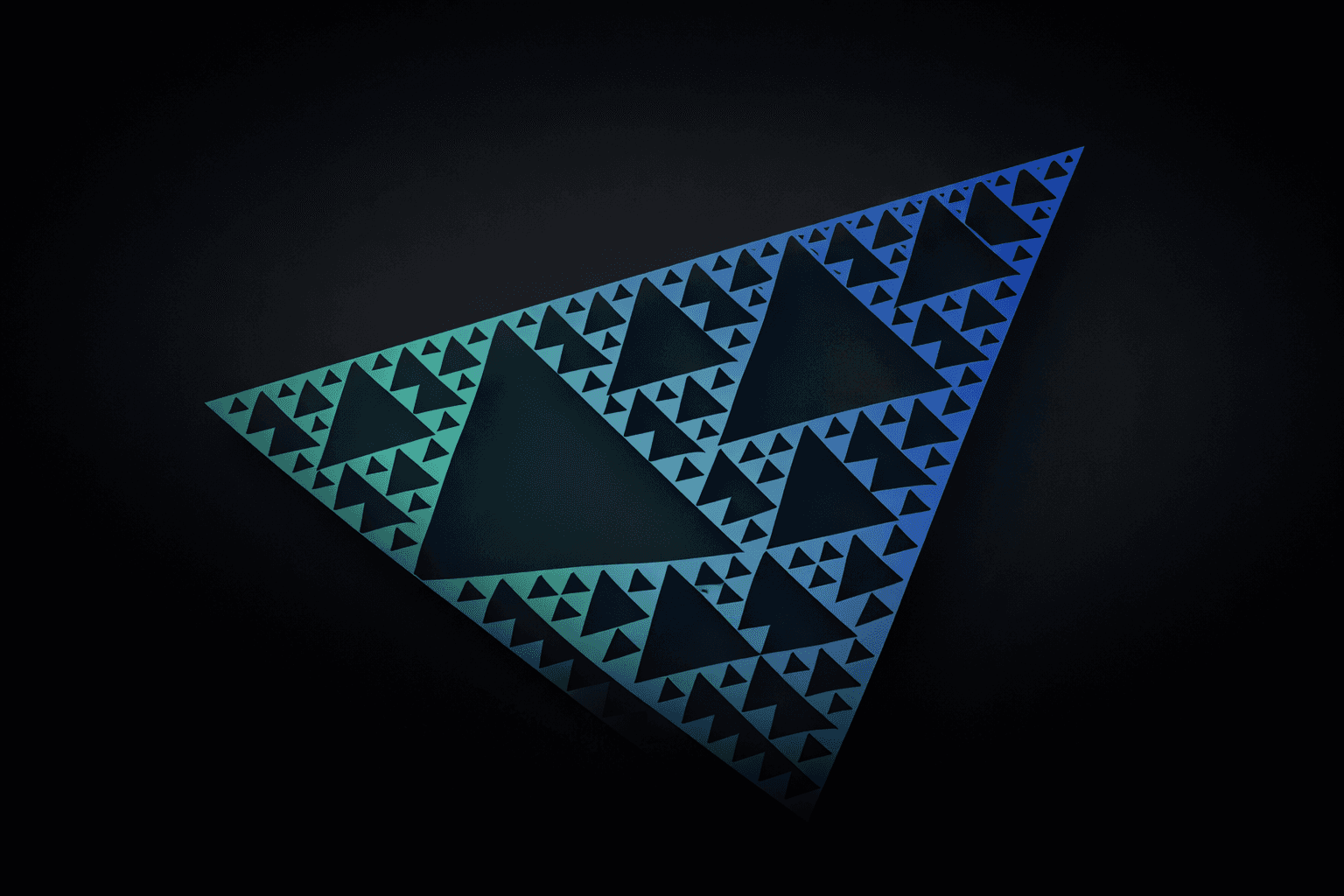
Instead of searching for a faster way to compute a logarithm or a trick to divide large numbers by hand, these thinkers started asking questions that had no numbers at all. They delved into the nature of infinity, the geometry of curved spaces, and the abstract patterns that underlie the fabric of reality. This was the era that gave rise to chaos theory, fractal geometry, and the very foundations of modern encryption. The genius shifted from "how do I calculate this faster?" to "what can I discover that nobody has even imagined before?" The automation tool did not replace the human mind; it redirected it toward the extraordinary.
The New Drudgery: How AI Automates Repetitive Tasks
Today, we face the exact same inflection point with generative AI, but the "calculations" have changed. The repetitive tasks that consume our professional lives are no longer about arithmetic on paper. They are about processing information.
An AI tool today can churn through ten thousand rows of sales data and spot a trend before you finish your morning coffee. It can generate a weekly status report from scattered notes. It can format a spreadsheet, clean up a messy dataset, or summarize a hundred page document into three bullet points. These are not creative acts. They are simply fast, accurate, and tireless repetitions of patterns.
The panic you feel when you see a chatbot draft an email in five seconds is the same panic a mathematician felt in 1975 when a calculator spat out a square root. But just as the calculator did not replace the mathematician, artificial intelligence will not replace the thinker. It will simply reveal what your job actually is when stripped of its mechanical repetition.
Human Creativity vs. AI Generation: The Proof Is This Page
Let me pull back the curtain for a moment. You are reading a blog post about how AI handles workplace automation while humans handle the extraordinary. The irony is that this very post is being written through that exact division of labour.
The ideas you are encountering here, the central metaphor of the calculator, the structure of the argument, and the decision to focus on repetition rather than complexity all of that came from a human mind. The heavy cognitive lifting, the act of noticing a pattern across centuries of technological panic, the creative leap to connect mathematicians with modern knowledge workers that was the real work.
What you see on this page, the sentences arranged in readable order, the transitions smoothed out, and the grammar kept in check, that is simply the calculator part of the job. The AI did not brainstorm this concept. It did not decide that this metaphor mattered. It did not choose to ask the questions that shaped the direction. It simply took the human thoughts and made them legible.
This is the AI contradiction in action. If you were impressed by the speed or the polish of the writing, you were admiring the tool, not the craft. The craft was the strategic thinking that happened before a single word was typed.
The Warning: The Cost of Ignoring AI Tools
History remembers the mathematicians who embraced the calculator and went on to discover chaos theory and encryption. It does not remember the ones who refused to touch the machine out of principle. They simply faded into irrelevance, clinging to their mechanical pencils while the world moved forward without them.
We see the same pattern today. There are still teachers who ban calculators in examinations, convinced that manual arithmetic builds character or somehow protects intellectual purity. They are not preserving mathematics. They are preserving a ritual. The students who leave those classrooms are not better thinkers. They are simply slower, having spent their formative years mastering a skill that a cheap digital device can now perform flawlessly.
The same fate awaits the professional who treats AI as a threat to be avoided rather than a calculator to be wielded. The writer who refuses to use an LLM will still be staring at a blank page while their competitors have already drafted and iterated three times. The data analyst who insists on cleaning every spreadsheet cell by hand will miss the trend that the automated tool spotted in seconds. They will not be celebrated for their purity. They will be replaced not by the AI, but by the human who learned to use AI.
The Future of Work: Your Job Isn't Disappearing, It's Evolving
But here is the flip side of that warning. While the refusers fade away, the early adopters will find themselves in an unprecedented position. Just as the mathematician freed from arithmetic discovered entire new fields of thought, you are about to discover what your professional mind is actually capable of when it is not exhausted by repetition. Your job is not disappearing. It is being unshackled.
Your Next Step
Identify one repetitive task you perform this week. It could be formatting a report, sorting data, or drafting a standard email. Commit to automating it using an AI tool. Notice what your mind wants to do with the time you just freed up. That impulse, that desire to explore beyond the mechanical, is the beginning of your extraordinary work.
The extraordinary has always belonged to those who let the machines handle the ordinary.
The question is not whether you will be replaced by artificial intelligence. The question is whether you will insist on being a manual computer in an age of electronic minds.
(If you found a typo, no you didn't. It's a stylistic choice.)
Subscribe to the newsletter
Get new posts sent straight to your inbox. No spam, ever.